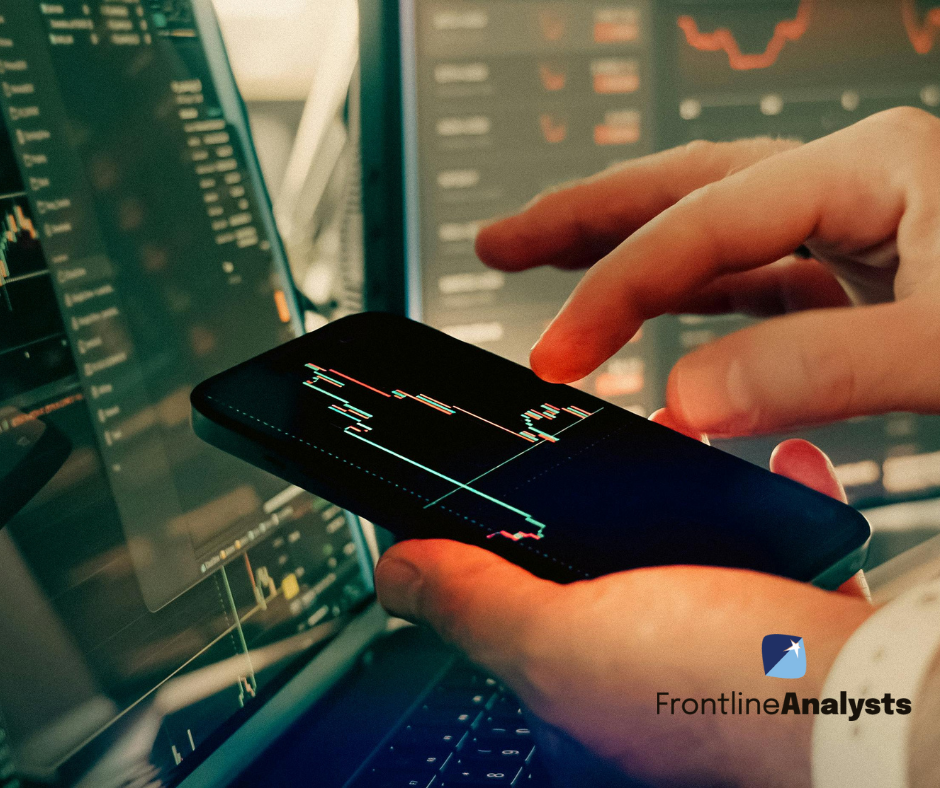
Automation has transformed financial markets. From AI-powered trading algorithms to predictive analytics, machines now execute most trades with speed and precision no human could match. Yet amid all the automation, one truth remains clear: human judgment is irreplaceable.
Algorithms are extraordinary at processing data, identifying patterns, and executing trades efficiently. But they’re limited by the scope of their programming. They can’t interpret nuance, question assumptions, or sense shifts in market sentiment driven by politics, policy, or psychology.[Text Wrapping Break]That’s where human expertise comes in, not to replace automation, but to guide it.
At Frontline Analysts, we believe the best outcomes come from the partnership between human intuition and machine intelligence. Our analysts use automation to process and visualise data faster, freeing them to focus on higher-level thinking: assessing strategic implications, validating model outputs, and making judgment calls in ambiguous situations.
This human-in-the-loop model is especially vital during periods of market stress. Algorithms can react too quickly or reinforce systemic risk, whereas experienced analysts bring context and calm to fast-moving environments. They understand that financial markets are not just systems but they’re ecosystems, influenced by emotion, regulation, and global interconnectedness.
As automation continues to evolve, the most successful institutions will be those that balance efficiency with insight. Human judgment will remain the critical differentiator ensuring that automation serves strategy, not the other way around.
The next generation of trading will belong to teams that understand this balance: where AI handles the volume, and humans handle the vision. In the age of automation, judgment is the ultimate competitive advantage.